
Crawl Space Mold Under Raised and Shotgun Homes in New Orleans
A large share of older New Orleans houses sit up off the ground. Shotgun houses are typically one-story, narrow homes raised on brick piers, and the space under the floor is open to outdoor air. That design kept houses above street water and let air move underneath. In a climate with summer dew points in the low to mid 70s, it also means the wood under your floor lives in very humid air most of the year.
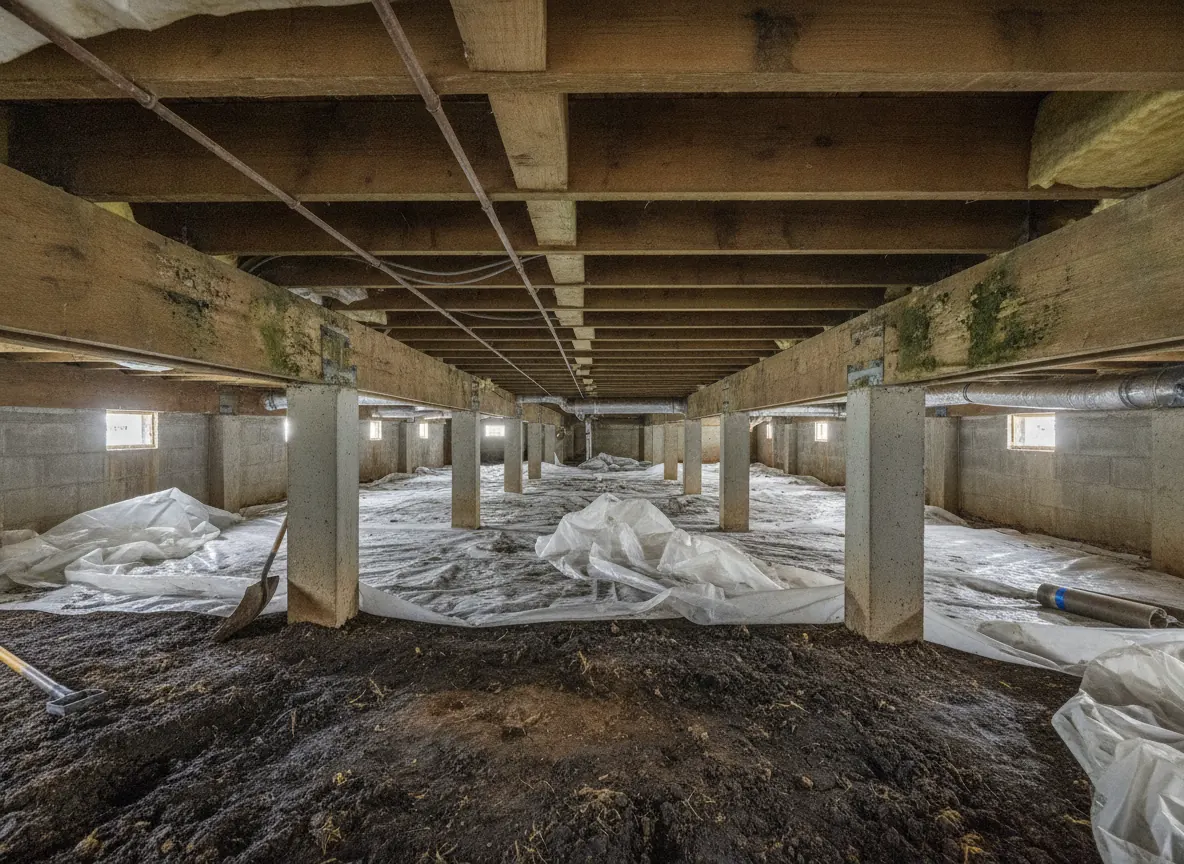
The housing is old, too. American Community Survey 2020–2024 figures show the median New Orleans home was built in 1960, and about 31% of units were built in 1939 or earlier. This guide explains why mold shows up under raised homes, how to tell what you are looking at, and what fixes local companies usually discuss.
Why does mold grow under raised houses?
Most crawl space mold comes from moisture meeting a cool surface. A few patterns come up again and again under raised homes:
- Humid air meets a cooled floor. When the AC runs, the subfloor and joists can be cooler than outdoor air. With summer dew points around 72–74°F (NOAA normals), water can condense on that wood or on insulation stapled under the floor.
- Damp soil. Bare dirt under the house gives off moisture all day. Low spots hold water after heavy rain.
- Poor drainage. Gutters that dump at the piers, clogged downspouts or a yard that slopes toward the house send water underneath.
- Plumbing leaks. A slow drip from a drain line or supply pipe under the house can go unnoticed for months.
- Flood leftovers. After street or storm flooding, mud and wet debris under the house dry slowly and keep the space damp.
- AC equipment and ducts underneath. Ducts or an air handler under the floor can sweat in humid air, and a disconnected duct can blow cold air into the crawl space.
How to tell if you have crawl space mold
Many people never go under the house, so the first clues usually show up indoors:
- A musty smell in rooms, often stronger when the AC first starts or after rain.
- Floors that feel soft, cup or buckle, or hardwood that gaps and swells with the seasons.
- Fuzzy white, gray, green or black growth on joists, subfloor or insulation.
- Insulation that sags, drips or has fallen to the ground.
- Standing water, wet soil or condensation on ducts and pipes.
White growth on crawl space dirt or wood is common. Some of it is mold, and some white crust on brick piers is efflorescence, a mineral deposit left as water moves through masonry. Efflorescence is chalky and dissolves in water; mold is fuzzy or spreads over wood. Either way, it tells you moisture is present. Color alone does not tell you whether a mold matters more or less.
Safety first under the house. Crawl spaces can hold standing water, wiring, pests and sharp debris. If you go in, wear gloves, eye protection and an N95 respirator, and don't touch wiring that may have been wet. EPA notes that people with asthma, allergies or weakened immune systems may be more sensitive to mold, so they should leave the inspection to someone else.
Can mold in a crawl space get into the house?
It can affect the house. Air moves up through gaps around pipes, floor registers and old floorboards, so musty odors and spores from below can reach living areas. Moisture problems underneath can also damage floor framing over time and attract wood-destroying insects. Fixing the moisture source matters as much as cleaning the mold.
What fixes do local companies usually recommend?
Every house is different, and the right fix depends on the cause. These are the options you are likely to hear about in a quote:
Fix water first
Repair plumbing leaks, extend downspouts, regrade low spots and clear debris so water stops collecting under the house.
Remove or clean affected material
Moldy insulation is usually removed. Joists and subfloor with surface growth are typically cleaned, and badly damaged wood may need a carpenter.
Cover the ground
A vapor barrier, usually heavy plastic sheeting over the soil, slows moisture rising from the dirt.
Decide on ventilation or encapsulation
Some homes stay vented with better drainage and a ground cover. Others are sealed and conditioned, with a dehumidifier or a small supply of conditioned air.
Check ducts and insulation
Seal and insulate ducts under the floor, and reinstall insulation where it suits the chosen approach.
Encapsulation is not right for every raised home. Many New Orleans houses sit high on piers with open skirting, and some are in historic districts where exterior changes need review. A sealed crawl space also needs a plan for flood water, because sealed spaces can hold water if a flood gets in. Ask any company to explain why its plan suits your house, how it handles drainage, and what upkeep it needs.
What does crawl space mold remediation cost?
| Item | Typical range | Source |
|---|---|---|
| Crawl space | $500–$2,000 | Fixr, Aug 2025 |
| Per square foot | $10–$30 · $10–$25 | Fixr, Aug 2025 · This Old House, Mar 2026 |
| Water damage + mold combined | $2,700–$10,000 | Fixr, Aug 2025 |
Drainage work, wood repair, a vapor barrier or full encapsulation are often priced separately from mold cleaning. Access matters too: a low crawl space under a shotgun double takes longer to work in than a tall one. See the mold remediation cost page for the full table and a calculator, and our crawl space mold page for what the job usually involves.
Can I clean crawl space mold myself?
EPA says homeowners can usually clean an area under about 10 square feet. Louisiana lets owners and tenants do mold work on their own property without a license (R.S. 37:2157). Crawl spaces are hard places to work, though, and the moldy area is often larger than it first looks. If growth covers more than a small patch, comes back after cleaning, or follows a flood, quotes from a professional are worth getting.
Louisiana license check. Louisiana requires a Mold Remediation license from the Louisiana State Licensing Board for Contractors (LSLBC) for mold remediation projects of about $7,500 and up (La. R.S. 37:2150.1). Before you sign, look up the company's license on the LSLBC website. In Louisiana, a mold remediation contractor may not also do the mold assessment on the same property, or own the company that does (R.S. 37:2158).
Questions to ask before you sign
- What is your LSLBC license number, and will it be on the written contract?
- Can you show proof of at least $100,000 in liability insurance and workers' comp?
- What is causing the moisture, and does your price fix the cause or just the mold?
- Which items are mold work, and which are drainage, carpentry or encapsulation?
- Will I get a written report when the work is done?
If flooding started the problem, read our flood and water damage mold page too. NOLA Mold Remediation is a free quote service, not a mold company. Some companies pay to receive requests. Request a free quote or call (504) 370-1142.
Frequently asked questions
Is white mold in a crawl space dangerous?
White growth is common under raised homes. Some is mold and some is efflorescence, a chalky mineral deposit on brick or block. EPA says mold can cause allergic and irritant reactions, and people with asthma or weakened immune systems may be more sensitive. The color does not change the answer: find and fix the moisture, then clean or remove the growth.
Should a raised New Orleans home have a vapor barrier?
Many do. A plastic ground cover slows moisture rising from the soil, which helps keep joists and subfloor drier. Whether to also seal and condition the crawl space depends on the house's height, skirting, flood risk and any historic-district rules, so ask each company to explain its choice.
Can mold under the house make the house smell musty?
Yes, it can. Air moves up through gaps around pipes, registers and floorboards, so odors and spores from the crawl space can reach the rooms above. A musty smell that is stronger after rain or when the AC starts is a common sign of a crawl space moisture problem.
How much does crawl space mold removal cost?
Fixr (Aug 2025) puts crawl space mold remediation at about $500 to $2,000 nationally. Drainage fixes, wood repair, vapor barriers and encapsulation are often priced separately. New Orleans-area quotes vary with access, size and the cause of the moisture.